Understanding key metrics like EPC (Earnings Per Click) can make all the difference in maximizing your earnings. If you are new to affiliate marketing or an experienced marketer looking to fine-tune your strategy, this guide is here to help you unlock the true potential of EPC.
Learn how this simple yet powerful metric can help you gauge traffic quality, optimize your campaigns, and spot the most profitable offers faster. Ready to take your affiliate marketing strategy to the next level? Let’s dive in!
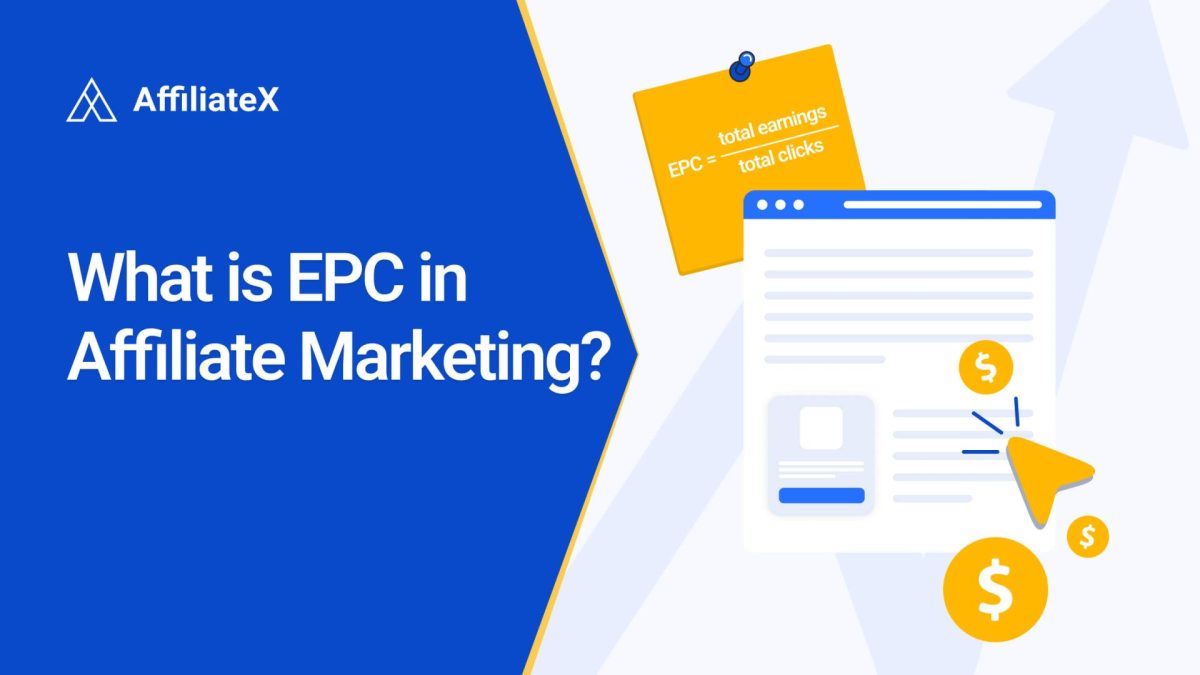
EPC (Earnings Per Click) is a key performance metric in affiliate marketing that shows the average amount of commission or revenue earned per click on an affiliate link. It’s calculated by dividing total commissions earned by total clicks. EPC is a valuable metric because it gives you an overall understanding of how much each click is worth in terms of income. By calculating EPC, you can assess the effectiveness of your traffic and ensure that the clicks are actually generating revenue, not just activity.
What makes EPC particularly useful is that it combines multiple elements, clicks, conversions, and commissions into a single, easy-to-understand number. This helps you move beyond just counting clicks and start measuring the actual value each click delivers. If you are new to affiliate marketing, think of EPC as a shortcut to assess whether your traffic is profitable. Fewer, but more targeted, clicks may result in a higher EPC than a large number of clicks that generate little revenue.
Why EPC in Affiliate Marketing Matters
EPC is important because affiliate marketing isn’t just about generating clicks. It’s about generating valuable clicks. When you track EPC alongside other metrics like total earnings, conversion rate, and average order value, you can better understand whether your content is attracting the right audience and converting them into buyers. This insight shifts the focus from simply increasing traffic to making each click count.
For many affiliates, EPC helps guide smarter decisions. By optimizing your approach to attract high-quality, high-converting clicks rather than just increasing traffic, you ensure your efforts yield higher revenue without wasting resources on ineffective traffic.
Why EPC Matters More Than Raw Click Volume
Source: Freepik
While raw click volume is a useful metric, it doesn’t tell you whether those clicks are valuable. EPC fills this gap by revealing the actual revenue earned per click. For example, a page with 300 clicks and a high EPC might outperform a page with 500 clicks but a much weaker EPC.
Experienced affiliates know that click volume can be misleading if you don’t consider the value those clicks bring. High click volume doesn’t always correlate with high revenue, and EPC is a more reliable metric for decision-making if your goal is to grow profit, not just traffic.
Why Does More Traffic Not Always Mean More Revenue?
More traffic doesn’t automatically translate into more revenue, because not all clicks have the same purchasing intent. EPC helps you assess the quality of traffic you send to your affiliate offers. For example, 1,000 loosely interested visitors may generate fewer conversions than 200 highly motivated visitors who are ready to buy.
Recent statistics reveal that “while click volume may increase, conversion rates could decline, resulting in nearly flat spending despite more clicks.” This shows that simply boosting traffic doesn’t guarantee higher revenue if the traffic is not qualified or ready to convert.
Why EPC Helps You Spot Profitable Offers Faster
EPC is useful for quickly identifying which affiliate offers are worth focusing on. By comparing the EPC of different offers, you can identify which ones are generating the most income per click, making them ideal candidates for further promotion. Even if an offer receives fewer clicks, it may still outperform others if its EPC is higher.
This metric helps you avoid getting misled by high-traffic offers that may look impressive but have low EPCs. With EPC, you can make data-driven decisions about which offers to prioritize, which landing pages to optimize, and where to scale your efforts for better results.
For example, if you earned $150 in commissions from 200 clicks, your EPC would be $0.75. This means each click generated an average of 75 cents in earnings. EPC helps you assess the overall performance of your campaigns, allowing you to compare different offers, traffic sources, and landing pages.
Keep in mind that not all platforms calculate EPC in the same way. Some may calculate EPC using total clicks, while others may use unique clicks or normalize it over 100 clicks. Always check the metric label before comparing offers or platforms to ensure you are making accurate comparisons.
Real Affiliate Scenarios That Make It Easy to Understand
Low clicks, high EPC example
For example, let’s say you are promoting an offer that earns $180 from just 120 clicks. The EPC would be:
$180 ÷ 120 = $1.50
This is a great result because each click generated significant revenue.
High clicks, low EPC example
On the other hand, another offer with 1,000 clicks may only earn $120. The EPC here is:
$120 ÷ 1,000 = $0.12
This scenario highlights that having more clicks doesn’t always mean more money.
When a lower-commission offer beats a higher-commission one
A lower-commission offer may still perform better if it converts at a higher rate. For instance, an offer with a $40 commission per sale may earn more in EPC than one with a $100 commission if it converts better. EPC measures the true value generated per click, not just commission rates.
How Affiliate Dashboards Display EPC
Most affiliate dashboards display EPC with other performance metrics, such as clicks, conversions, actions, revenue, and commissions. This layout is essential because EPC, when read alongside these metrics, provides a clearer picture of your campaign’s overall performance. A strong EPC typically indicates that your traffic is well-targeted and converting at a profitable rate.
Many dashboards allow you to break down results by link, landing page, referral source, or time period. This helps you identify which assets are performing best and adjust your strategy accordingly.
Personal EPC vs Network-Average EPC
Personal EPC is based on your own traffic performance and how your specific audience interacts with a given offer. This version of EPC is the most useful for your own strategy, as it shows how your content and traffic sources are performing.
Network-average EPC, on the other hand, is an aggregate figure that combines the performance of multiple affiliates, traffic sources, and audiences. While network-average EPC can serve as a useful benchmark, it should not be relied on for decision-making, as it may not reflect your personal performance. Using both can give you a better perspective, such as using network EPC for initial comparisons and personal EPC for strategic decisions, which adapt to your audience and traffic.
EPC vs CPC vs CPA vs Conversion Rate: What Is the Difference?
Each of these metrics, EPC, CPC (Cost Per Click), CPA (Cost Per Action), and Conversion Rate, offers valuable insights but serves different purposes in affiliate marketing. EPC tells you how much you earn per click, while CPC shows how much you pay per click, helping you understand whether your traffic acquisition costs are sustainable.
CPC is more relevant when managing paid campaigns, while EPC is more focused on revenue generation. CPA, on the other hand, measures how much you pay per specific action, such as a sale or a lead. It is often more useful for campaigns where actions are the primary goal rather than just clicks. Conversion rate measures the percentage of visitors who complete a desired action, such as making a purchase.
Each metric provides unique insights, but EPC remains a crucial indicator of profitability because it combines the effectiveness of your traffic with the earnings per click.
Why EPC is One of the Most Important Metrics in Affiliate Marketing
EPC is a critical metric because it directly reflects the income you generate per click. Understanding EPC helps you prioritize which offers, traffic sources, and campaigns to focus on. High EPC usually correlates with better quality traffic, higher payouts, and more efficient campaigns. It’s an essential tool for evaluating the effectiveness of affiliate marketing efforts and for optimizing strategies to achieve higher profits.
Compare Affiliate Offers
EPC is particularly useful for comparing different affiliate offers. Since it shows how much you make per click. It lets you assess which offers are more profitable for your specific audience. If two offers are receiving similar amounts of traffic but one has a higher EPC, that offer is likely more profitable and should be prioritized.
Evaluate Traffic Quality
EPC also serves as an indicator of traffic quality. A higher EPC often means the traffic you are sending is highly targeted and more likely to convert. Conversely, a low EPC could suggest that your traffic is not well-aligned with the offer. By optimizing traffic sources and audience targeting, you can improve EPC and increase your affiliate earnings.
Supports Smarter Content & Campaign Decisions
When you track EPC across various campaigns or content types, you can identify which pages or strategies generate the most value for your traffic. This allows you to make data-driven decisions about which content to scale, optimize, or prioritize. Tracking EPC can help you understand which types of content and strategies resonate most with your audience.
Choosing the Right Pages to Optimize
Optimizing for EPC means focusing on pages that generate the most revenue per click. By analyzing performance reports, you can identify pages that attract clicks but don’t convert well. These pages are good candidates for optimization, whether that means tweaking the copy, improving the call to action, or adjusting the design to better guide visitors toward making a purchase.
Choosing the Right Traffic Source to Scale
EPC helps you identify which traffic sources are driving the most valuable clicks. By tracking EPC across channels, you can focus on the most profitable traffic sources and scale them. Whether you are using paid ads, organic traffic, or influencer marketing, EPC helps you determine where to invest your resources for maximum return.
What is a Good EPC in Affiliate Marketing?
EPC (Earnings Per Click) is one of the most important metrics in affiliate marketing because it reveals the average revenue generated per click. However, there is no universal “good EPC” because it depends on multiple factors, including the niche, product price, traffic quality, and the offer’s conversion rate.
EPC varies greatly across different programs, with some offering high payouts and others offering higher volume. Therefore, the most useful EPC benchmark is often your own personal data, compared across similar offers, traffic sources, and time periods.
Why is there no universal “good EPC”
Different affiliate programs use different calculation methods. Some display EPC based on total clicks, while others normalize it across 100 clicks, or may even calculate it differently depending on the type of traffic or conversion window. Higher-priced products tend to generate higher EPCs due to larger commissions, while lower-priced products may depend on volume for profitability. EPC benchmarks also differ across industries and traffic sources, making it difficult to define one universal “good EPC”.
The biggest factors that influence EPC benchmarks
Several factors, including niche, traffic quality, commission structure, and product price, shape EPC. For example, higher-value products tend to yield higher EPCs because they offer larger commissions. Similarly, traffic from high-intent visitors typically yields higher EPCs because they are more likely to convert. The commission model (flat rate, revenue share, etc.) and the conversion rate also significantly affect EPC.
Niche and product price point
Different niches and product price points influence EPC because higher-priced products typically generate higher commissions, thus increasing EPC. However, these products may require longer buying cycles. In contrast, low-priced products can rely on high volume, which may result in a lower EPC but higher overall earnings.
Commission model and payout structure
The commission model also affects EPC. Revenue-sharing models may offer lower upfront commissions but can result in higher EPC when they generate consistent sales. On the other hand, flat-rate commissions tend to provide a predictable EPC but may not scale as well as performance-based models. Understanding the right commission model for your audience is key to maximizing EPC.
Traffic source and user intent
Traffic quality is a major determinant of EPC. Highly targeted traffic from users who are closer to making a purchase. For example, comparison or product review traffic will typically have a higher EPC than traffic from users who are still in the early stages of their buying journey. High-quality traffic generally leads to better conversions and, consequently, higher EPC.
GEO, device, and seasonality
EPC can vary based on geographical location, device type, and seasonality. Different regions and devices convert at different rates, and understanding this can help you optimize your traffic sources. Seasonal trends can also impact EPC, as certain products or offers perform better at different times of the year. For instance, holidays or special events can have a spike in EPC as consumers become more willing to make purchases.
How to judge whether your EPC is actually healthy
To determine if your EPC is healthy, compare it to your historical performance and look for trends over time. A healthy EPC should show consistent or improving results based on the same offer, traffic source, and time period. Additionally, ensure your EPC is above your CPC (Cost Per Click) if you are using paid traffic, as this will determine whether your efforts are actually profitable. Inconsistent or declining EPCs indicate issues with offer relevance, traffic quality, or landing page optimization.
What Affects EPC the Most?
EPC is influenced by several key factors, including traffic quality and intent, offer relevance, and landing page performance. To improve EPC, you need to understand these factors and optimize accordingly.
Traffic quality and audience intent
Traffic quality directly impacts EPC. High-intent traffic, such as users who are already looking for a solution, is more likely to convert into a sale, thus raising EPC. Low-intent traffic can generate clicks but little revenue, which results in a low EPC. Identifying and focusing on high-quality traffic sources is critical to improving EPC.
Offer relevance and audience-product fit.
If the offer does not match the audience’s needs, EPC will likely suffer. Ensuring that the products you promote resonate with your target audience is essential for maximizing EPC. An offer that aligns with the audience’s intent, price range, and expectations will convert better, resulting in a higher EPC.
Landing page conversion rate
Your landing page directly impacts EPC. A page that is slow, confusing, or misaligned with the offer will lead to fewer conversions and a lower EPC. A well-optimized landing page with clear CTAs, persuasive copy, and a seamless user experience can significantly boost EPC.
Cookie duration, attribution, and funnel length
The length of your attribution window (also known as cookie duration) can affect EPC. A short attribution window might miss conversions that happen days after the initial click, while a longer window allows you to track longer buying cycles, which may lead to more sales. Additionally, the attribution model, first-click or last-click, will determine which conversions are credited to your affiliate efforts.
Short buying cycles vs long buying cycles
Short buying cycles are typically easier to track, as conversions occur quickly after the click. And for high-ticket or research-heavy products, long buying cycles are more common. In these cases, a longer attribution window is necessary to capture the full value of a click and accurately reflect the EPC.
Network EPC limitations and beginner’s misinterpretation
Network EPC often aggregates data from many affiliates and traffic sources, which can make it appear higher or lower than it would be for an individual affiliate. This makes it difficult for beginners to rely solely on network EPC when choosing offers. Network EPC is useful for shortlisting offers, but should not be the only metric used to decide which ones to promote.
Commission approval rates, reversals, and tracking quality
Commission approval rates and transaction reversals can affect EPC, as commissions could be canceled or invalidated, particularly when products are returned or the sale is deemed non-commissionable. It’s important to track not just clicks and conversions but also commission approvals and reversals. If your tracking system has errors or fraudulent clicks, this will lower your EPC.
How to Increase EPC in Affiliate Marketing
Source: Freepik
Increasing EPC in affiliate marketing often involves optimizing various aspects of your affiliate strategy, from choosing the right offers to improving the content and traffic sources that lead to conversions.
Choose offers by EPC and conversion data, not commission size alone
Focusing solely on commission size can be misleading. A higher commission does not always result in a higher EPC. Instead, focus on the conversion data and EPC from different offers. An offer with a lower commission but higher conversion rates or better audience fit can often yield a higher EPC overall.
Create bottom-of-funnel content that converts
Bottom-of-funnel (BOFU) content targets users who are already close to making a purchase. This type of content includes product reviews, comparison articles, and “Best X for Y” lists. These pages attract high-intent visitors who are ready to act, resulting in higher conversion rates and, ultimately, a higher EPC.
Product reviews
Product reviews are an effective form of BOFU content because they provide detailed information to visitors who are considering a purchase. When paired with affiliate links, reviews can convert at higher rates and yield higher EPCs.
Comparison articles
Comparison articles help users evaluate different options, increasing the likelihood of a purchase. These types of articles tend to attract high-intent visitors who are already close to making a decision, resulting in a higher EPC.
Best X for Y lists
“Best X for Y” lists help users quickly compare options based on specific needs or preferences. This type of content is especially effective in affiliate marketing because it targets users actively searching for the best options in a particular category, leading to better conversions and higher EPCs.
Improve pre-sell pages and CTA placement
Pre-sell pages help warm up visitors before they reach the final sales page. A well-optimized pre-sell page with clear calls to action (CTAs) can significantly improve conversion rates and increase EPC. Ensure your CTA buttons are easy to find, your messaging is clear, and your page loads quickly.
Match offers to traffic source, GEO, and device
Matching the right offer to the right traffic source, device, and geography can significantly improve EPC. For example, an offer that works well on mobile devices may not perform as well on desktops, and vice versa. Additionally, different geographic regions can have different preferences and buying behaviors, so it’s important to adapt your offers accordingly.
A/B test hooks, copy, buttons, and link positions
A/B testing lets you refine your messaging, CTAs, and other content elements. Even small changes, such as tweaking a button’s wording or moving a link, can improve conversion rates and increase EPC. Always test your campaigns to see what works best.
Remove low-intent clicks and wasted traffic
Low-intent traffic can hurt your EPC by driving clicks that don’t convert. It’s important to filter out irrelevant or low-quality traffic sources. By focusing on high-intent traffic, you can significantly improve your EPC without increasing the number of clicks.
Pages with clicks but weak revenue
Pages that generate clicks but weak revenue should be your first target for optimization. The issue could be poor landing page design, weak calls to action, or an offer mismatch. By improving these pages, you can turn low-earning clicks into more profitable ones.
Placements that generate curiosity clicks but not buyer clicks
Some placements might generate a lot of interest but not be effective at driving conversions. A flashy link or button may attract curiosity-driven clicks, but if they don’t convert into sales, your EPC will suffer. Reevaluate these placements and consider adjusting or removing them if they are not driving the desired results.
Focus on the Value of Every Click, Not Just More Clicks!
EPC reflects your affiliate marketing performance. By understanding how EPC works and using it alongside other key metrics such as CPC, CPA, and conversion rate, you can make more informed decisions that drive both traffic and revenue. Whether you are comparing offers, analyzing traffic quality, or optimizing landing pages, EPC will guide your strategy to ensure that every click counts. Keep testing, optimizing, and refining your approach, and watch your EPC rise.
Afrin is a skilled Product Marketing Specialist passionate about WordPress products. She effectively combines her background in Telecommunication Engineering and her MBA in Marketing to bridge technology and marketing. Afrin transforms technical WordPress features into compelling, user-centric content that drives conversions and fosters engagement. In her free time, she enjoys traveling, animated movies, and singing, reflecting her creativity and adventurous spirit.