
Best Lead Magnet Ideas for Amazon Affiliate Blogs

As an Amazon Associate, you are competing against a 24-hour cookie and ever-changing algorithms. If you aren’t capturing your audience’s information the moment they arrive, you are essentially doing free marketing for Amazon. You are putting in the effort to send customers their way, but you are failing to secure your most valuable asset by neglecting to nurture long-term relationships. This is where your best Lead Magnet ideas become your ultimate success point.
A lead magnet is a strategic bridge that turns a passing stranger into a loyal subscriber. Instead of hoping for a one-time click, you gain the ability to land in their inbox week after week, recommending products and building the kind of trust that survives algorithm updates and commission cuts.
In this guide, you will find the best lead magnet ideas for Amazon affiliate blog strategies that can deliver conversion rates of 10% to 20%. Whether you are in the fitness, tech, or home decor niche, these ideas will help you stop renting your audience and start owning it.
What is a Lead Magnet for Amazon Affiliates
A lead magnet is a valuable free resource you offer in exchange for your customers’ email addresses. For Amazon affiliate bloggers, lead magnets serve a dual purpose. An Amazon affiliate can build your lead list while establishing you as a trusted authority in your niche. When executed correctly, lead magnets can achieve conversion rates of 10%-20%, as mentioned earlier, significantly outperforming basic newsletter signups.
The most effective lead magnet ideas are those that provide immediate, actionable value that solves a specific problem your audience faces. This helps to build trust before you ever promote a single Amazon product, making your future recommendations far more effective.
Why Amazon Affiliates Need Lead Magnets
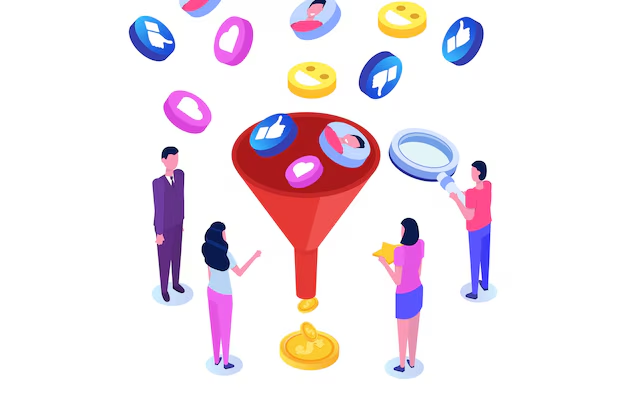
Image Source: Freepik
Amazon’s Associate program is highly accessible but faces important challenges. Commission rates have declined over the years, and the cookie duration is only 24 hours. Without an email list, you are entirely dependent on search traffic and hoping visitors click your affiliate links immediately. Lead magnets solve these problems by:
1. Creating Multiple High-Intent Touchpoints
The 24-hour Amazon cookie is the affiliate’s biggest hurdle. If a visitor doesn’t buy immediately, you lose the commission.
- The Solution: A lead magnet allows you to capture that visitor before they leave. Once they are on your list, you can send automated “nurture” sequences that reintroduce products over days or weeks.
- The Impact: Instead of one chance to convert, you get dozens of opportunities to place your affiliate link in front of a ready-to-buy audience.
2. Building “Expert-First” Authority
In the era of AI-generated content, shoppers are sceptical of random product links. They want recommendations from trusted voices.
- The Solution: A well-crafted lead magnet, such as a “2026 Home Office Ergonomics Checklist” or a “7-Day Beginner’s Keto Meal Plan,” provides immediate value without asking for a sale first.
- The Impact: This positions you as a helpful expert rather than a salesperson. When you eventually recommend a specific keyboard or air fryer on Amazon, your audience is significantly more likely to trust your judgment and click through.
3. Precision Segmentation for Targeted Offers
Not every visitor to your site wants the same thing. Sending a “one-size-fits-all” newsletter leads to high unsubscribe rates.
- The Solution: Use different lead magnets for different categories. A visitor who downloads a “Travel Gear Packing List” is interested in luggage, while one who downloads a “Photography Lighting Guide” is interested in cameras.
- The Impact: You can segment your list based on what they downloaded. This allows you to send highly relevant, high-conversion Amazon product recommendations that match their specific interests.
4. Algorithm-Proofing Your Business
Relying solely on SEO or social media algorithms is a high-risk strategy. One update can wipe out your traffic overnight.
- The Solution: Your email list is an “owned asset.” No change to Google’s ranking factors or Instagram’s feed can take away your direct line to your subscribers.
- The Impact: Lead magnets act as a bridge, moving “rented” traffic from search/social into a “permanent” home in your own list, ensuring your revenue stays stable even when platform algorithms shift.
5. Compounding Lifetime Customer Value (LCV)
The most profitable affiliates don’t focus on one-off sales. They focus on repeat buyers.
- The Solution: By using lead magnets to build a community, you can promote seasonal sales, Prime Day, Black Friday, etc., and new product launches to the same group of people year after year.
- The Impact: An email subscriber is worth significantly more than a website visitor. Over time, the cost of acquiring that lead drops to near zero, while the revenue they generate through multiple Amazon purchases continues to climb.
Top Lead Magnet Ideas for Amazon Affiliate Blogs
As lead magnets are the first step. Choosing the right one for your specific audience is where the profit happens. The most successful Amazon affiliates offer the exact resource that reduces the gap between a reader’s curiosity and their final purchase.
Below are the top 11 lead magnet ideas for Amazon affiliate blogs that turn casual browsers into high-intent shoppers.
1. Product Comparison Guides
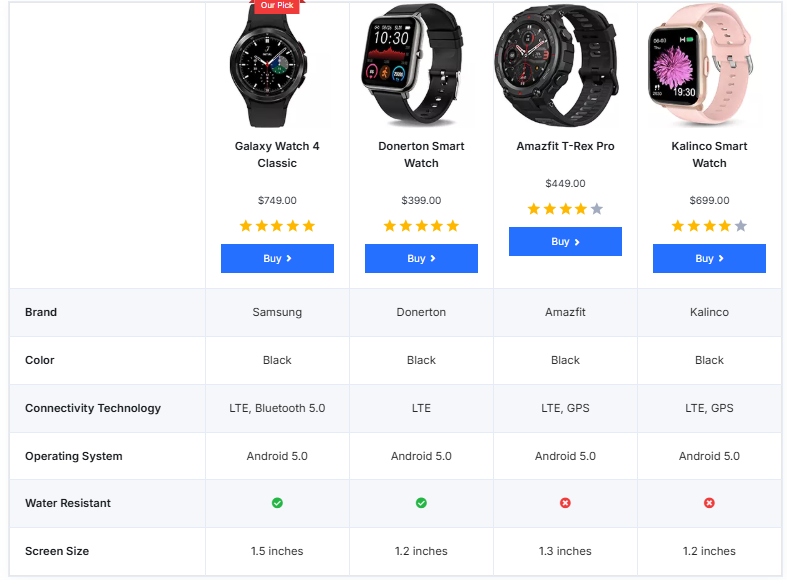
You can create a comparison guide on your blog that will help buyers make informed decisions among similar products. These work exceptionally well because they address the exact moment when someone is ready to purchase.
For example, “Top 5 Robot Vacuums Compared: Features, Pricing, and Performance.”
Why they work: In this type of Amazon affiliate blog post, you can reach buyers who are already in the consideration stage. You can make them highly likely to click your affiliate links after reading your detailed comparison.
Implementation tip: Include actual product test results, pros-and-cons tables, and scenario-based recommendations to add credibility and prompt your audience to make a purchase decision immediately.
2. Buying Guides and Checklists
Buying guides and checklists are the type of Amazon affiliate blog posts that can educate your audience on everything they need to know before making a purchase decision in your niche.
Suppose the content niche is “The Complete First-Time Home Gym Setup Guide.”
Why they work: This type of blog content helps you to establish yourself as the go-to resource in your niche while naturally incorporating affiliate products as recommended solutions.
Implementation tip: You should make this blog content downloadable as PDF checklists that readers can reference while shopping. Also, update them seasonally to keep content fresh and trendy.
3. Exclusive Discount and Deal Alerts
You can offer your subscribers or potential customers early access to Amazon deals, Prime Day alerts, and seasonal sales on products in your niche.
For example, “VIP Deal Alerts: Amazon Home Deals Delivered Weekly.”
Why they work: This type of content niche everyone loves because they can save money, and positioning yourself as a deal curator creates ongoing value that keeps subscribers engaged.
Implementation tip: You can use Amazon’s Bounty Program, which pays a fixed fee for Prime signups alongside your product commissions to drive additional revenue.
4. Resource Libraries and Toolkits
Creating a curated collection of resources related to your niche can help you include links to free tools, downloadable templates, tutorial videos, and recommended products.
For instance, “Complete Fitness Toolkit: Workout Plans, Nutrition Guides, and Essential Equipment.”
Why they work: These types of resource libraries demonstrate expertise while saving your audience countless hours of research. They are also highly shareable and allow comparison and instant decision-making.
Implementation tip: You can include both free resources and affiliate product recommendations, clearly distinguishing between the two.
5. Seasonal Gift Guides
You can create time-specific gift guides for holidays, birthdays, anniversaries, and special occasions that convert exceptionally well during peak shopping seasons, update them the next year according to the next year strategy, and make the content evergreen and highly engaging.
Like “50 Unique Gift Ideas for Coffee Lovers (All Under $50).”
Why they work: Gift shopping is a high-intent behavior, and people appreciate curated recommendations that reduce decision fatigue.
Implementation tip: You can create these well in advance of major shopping holidays and send reminder emails as the dates approach. Update annually with fresh products to drive immediate sales and boost conversions.
7. Interactive Quizzes and Assessments
Another type of the best lead magnet ideas could be quizzes that provide personalized product recommendations based on user responses to your supported niche, which converts up to 70% better than static PDFs.
Suppose “What’s Your Perfect Coffee Maker? Take Our 2-Minute Quiz.”
Why they work: This type of Amazon affiliate blog can support product personalization and increase engagement and purchases. People trust customized recommendations more than generic lists. So, including this in your blog content, and this could be one of your powerful lead magnet ideas to work with.
Implementation tip: You can use tools like Interact or Typeform to create quizzes and deliver results via email, along with specific Amazon product links.
8. Problem-Solution Workbooks
You can also prepare Amazon affiliate blogs in actionable workbooks that help readers solve specific problems, with product recommendations integrated as solutions.
For example, “30-Day Meal Planning Workbook with Kitchen Organization Guide.”
Why they work: This type of workbook requires active engagement and helps you to create a stronger connection with your brand. The problem-solving format naturally positions products as solutions.
Implementation tip: You can include fillable PDF versions and recommend specific products for each section or challenge.
9. Free Product Samples and Mini-Courses
If you plan to create digital products for your niche, consider offering a sample chapter or a mini-version as a lead magnet.
For example, “First Chapter Free: Complete Keto Meal Prep Guide.”
Why they work: As you know, samples let people experience your expertise risk-free. If they love the sample, they are more likely to trust your product recommendations and get back to your affiliate website for similar comparisons.
Implementation tip: Your sample should provide genuine value while leaving readers wanting more.
10. Swipe Files and Templates
You can draw your customer’s attention by creating ready-to-use templates, email scripts, or planning documents that save time and effort.
Example formats: “20 Instagram Caption Templates for Product Photography” or similar type.
Why they work: This type of template provides immediate value and is easy to consume. They help you position yourself as someone who understands practical needs.
Implementation tip: You can include product recommendations for tools or items that complement the template usage.
11. Case Studies and Research Reports
You can analyze original data, testing results, or detailed case studies, positioning you as an authority while attracting backlinks and media attention.
Example formats: “I Tested 15 Air Purifiers for 6 Months: Complete Results Report” or such niches.
Why they work: Your original research is valuable content that people can’t find elsewhere. You can easily establish credibility and generate ongoing interest for your target audience.
Implementation tip: You should promote your research on social media and industry forums to drive traffic. You need to plan to update this type of Amazon affiliate blog niche annually to maintain relevance.
Best Practices for Creating High-Converting Lead Magnets
Focus on One Specific Problem
The most effective lead magnets solve one specific, urgent problem for a clearly defined audience. Avoid trying to be everything to everyone.
Good: “5-Minute Morning Routine for Busy Professionals (Essential Products Included)” Bad: “Complete Guide to Everything About Health and Wellness”
Make It Immediately Actionable
Your lead magnet ideas should provide value that someone can implement within 24 hours. Quick wins build trust faster than lengthy, theoretical content.
Keep It Concise
Shorter, focused lead magnets often convert better than lengthy ebooks. People want quick solutions, not homework.
Deliver Instantly
Set up automated email delivery so subscribers receive their lead magnet ideas immediately after signing up. Delayed gratification kills conversion.
Match Your Blog’s Niche
Your lead magnet should align perfectly with your content focus. A tech blog shouldn’t offer gardening guides, no matter how valuable they are.
Include Clear Next Steps
End your lead magnet with a clear call to action, such as reading specific blog posts, following you on social media, or checking out your recommended products list.
Comply with Amazon’s Terms
Never include Amazon affiliate links directly in emails. Instead, direct subscribers to blog posts or landing pages that contain your affiliate links. This complies with Amazon’s Operating Agreement.
How to Promote Your Lead Magnets Effectively
Effective promotion is about strategic placement and relevance, ensuring that your free resource appears at the exact moment a reader realizes they have a problem. By treating your lead magnet as a high-value product rather than a side note, you can transform a passive browser into a lifelong subscriber and a loyal shopper.
Here are some of the most effective ways to promote your lead magnet ideas to maximize your Amazon affiliate blog conversions.
Use Multiple Opt-in Points
Place opt-in forms strategically throughout your site:
- Exit-intent popups when visitors are about to leave
- Content upgrades within relevant blog posts
- Sidebar widgets on every page
- Welcome mats on your homepage
- Inline forms within blog content
Leverage Social Proof
Include testimonials, subscriber counts, or statistics showing how your lead magnet helped others.
Test Different Formats
Not every audience responds to the same format. Test ebooks, checklists, videos, and quizzes to see what converts best for your specific audience.
Segment Your List
Use different lead magnets to attract different audience segments, then tailor your email sequences and product recommendations accordingly.
Common Mistakes to Avoid
Overcomplicating Your Lead Magnet
Don’t spend months perfecting an elaborate lead magnet. Launch with something valuable but simple, then improve based on feedback.
Forgetting Mobile Optimization
Over 60% of emails are opened on mobile devices. Ensure your lead magnets, especially PDFs, are mobile-friendly.
Making Signup Too Complicated
Only request email addresses initially. Adding extra form fields significantly decreases conversion rates.
Using Irrelevant Lead Magnets
Attracting many subscribers with unrelated lead magnets creates a list of people who won’t buy your recommended products.
Neglecting to Update Content
Lead magnets with outdated information harm your credibility. Review and update at least annually.
Violating Amazon Policies
Remember that Amazon prohibits affiliate links in emails and certain incentivized promotions. Always review their Operating Agreement.
Advanced Strategies for Experienced Affiliates
Create Lead Magnet Funnels
Build sequences of increasingly valuable content that guide subscribers toward higher-value product recommendations.
Use Paid Traffic
Once you have a proven, high-converting lead magnet, invest in social media or Google Ads to rapidly scale your list growth.
Develop Multiple Funnel Entrances
Create 5-10 distinct lead magnets targeting different audience segments within your niche, each linked to an email sequence.
Repurpose Top Content
Transform your highest-performing blog posts into expanded lead magnets to capture value from proven topics.
Partner with Other Affiliates
Cross-promote lead magnets with non-competing affiliate marketers in complementary niches.
The Future of Lead Magnets for Amazon Affiliates
As Amazon’s affiliate landscape evolves, several trends are shaping lead magnet strategies:
AI-Powered Personalization
AI-powered tools can now create personalized lead magnets and product recommendations based on user behavior and preferences.
Interactive Content Growth
Quizzes, assessments, and calculators are outperforming static PDFs by significant margins and will continue gaining prominence.
Privacy-First Marketing
As cookie restrictions tighten, first-party data from email lists becomes even more valuable to affiliate marketers.
Video Dominance
Short-form video tutorials and video-based lead magnets are increasingly preferred by younger audiences.
Community-Centric Approaches
Access to exclusive communities and peer networks is becoming more valuable than traditional content downloads.
Explore Best Lead Magnet Ideas for Amazon Affiliate Blogs
Lead magnets are not optional extras for serious Amazon affiliates. They are essential infrastructure for building sustainable income. While Amazon’s commission rates can be modest, the lifetime value of an engaged email subscriber far exceeds the value of any single transaction.
Start by choosing one lead magnet idea from this guide that aligns with your niche and audience needs. Create something genuinely valuable, set up your email delivery, and begin testing different promotional strategies.
Remember that your goal isn’t just to collect email addresses. It’s to build relationships with people who trust your recommendations. When you consistently provide value without constant selling, your affiliate promotions become welcomed advice rather than annoying spam.
The Amazon affiliates generating substantial income aren’t relying solely on search traffic. They are building owned audiences through strategic lead magnets and nurturing those relationships over time. Now it’s your turn to implement these proven strategies and transform casual visitors into loyal subscribers who eagerly await your next product recommendation.
If you want to read more strategic content, don’t forget to follow our blog posts and our YouTube channel.
🎁 Bonus: Get the Best Amazon Affiliate Plugin for Your Business