
Internal Linking Strategies to Boost Amazon Affiliate Earnings
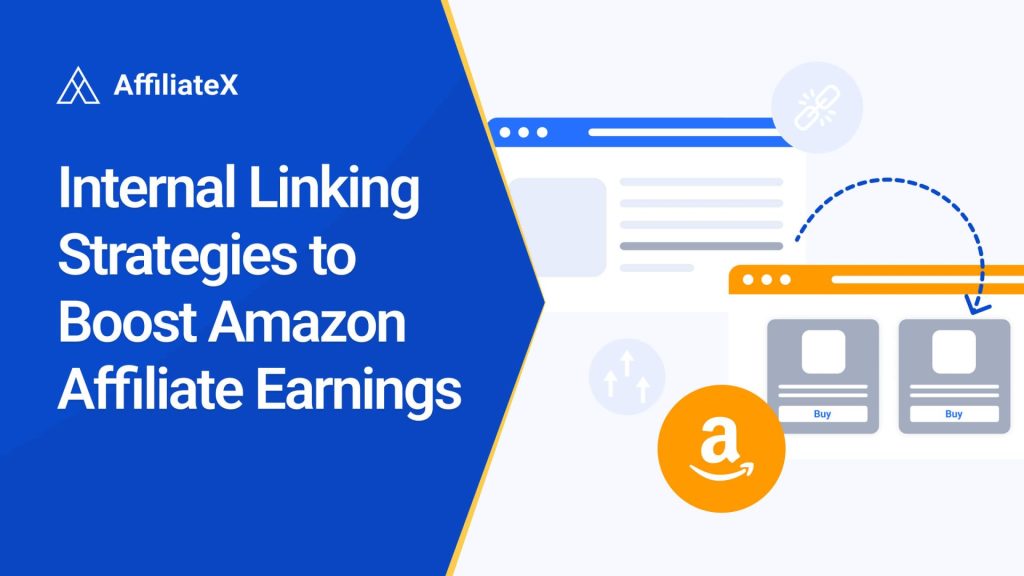
For Amazon affiliate marketing, organic traffic is no longer just about external backlinks and keyword density. Today, internal linking strategies to boost Amazon Affiliate earnings have emerged as a “secret weapon” for site owners, one of the last remaining ranking levers entirely within an affiliate’s control. As Google’s algorithms shift toward rewarding topical authority and seamless user journeys, the way you connect your informational “how-to” guides to your high-converting product roundups can make or break your revenue goals.
Effective internal linking strategies do more than help search engines crawl your site. It distributes PageRank to your most profitable pages, builds a logical structure for AI-driven search models, and guides readers from initial curiosity to the final “Buy Now” button.
This guide explores why internal linking is critical for Amazon affiliates, best practices for implementing a semantic-focused strategy, and how specialized tools like AffiliateX can automate and optimize this process to maximize your earnings.
Why Internal Linking Strategies are Critical for Amazon Affiliates
Internal linking is no longer a “nice-to-have” SEO tactic. It is one of the few ranking and revenue levers that Amazon affiliates still fully control. With Google relying heavily on semantic understanding, user journeys, and engagement signals, internal links act as both an SEO signal and a behavioural guide.
Modern affiliate sites must satisfy three audiences at once: search engine crawlers, AI-powered ranking systems, and human readers who scan and decide faster than ever. Internal linking sits at the intersection of all three. It tells Google which pages are most important, helps AI models understand topical depth, and gently moves users from curiosity to purchase intent.
In a world where backlinks are harder to earn and competition is saturated, internal linking has become the backbone of scalable affiliate growth.
Authority Distribution (PageRank)
Google evaluates websites more as topic authorities than collections of individual pages. Informational content still attracts most backlinks, but commercial pages still generate revenue. Internal linking is how you connect the two.
When a trusted informational article links to a commercial roundup or product review, it transfers authority and relevance. This internal authority flow helps product pages rank without needing direct backlinks, which are increasingly difficult to acquire for affiliate content.
The key shift is intent alignment. Links must connect pages that serve the same search intent spectrum. For example, a troubleshooting guide should link to a buying guide only when it naturally aligns with the reader’s problem-solving process. This reinforces topical authority instead of diluting it.
Enhanced Crawlability
Affiliate sites are often large, content-heavy, and frequently updated. Search engines rely on internal links to understand site structure, page importance, and update frequency. Pages that are not internally linked, or are only connected through archives or pagination, risk being devalued or ignored. Internal linking ensures that new content is discovered quickly and that older high-performing pages continue to pass value to newer ones.
A clean internal link structure also helps search engines identify cornerstone content, supporting articles, and transactional pages. This clarity improves crawl efficiency and reduces the risk of index bloat, which can silently hurt rankings.
Boosting Revenue
Traffic alone no longer guarantees affiliate income. Monetization depends on how efficiently you move users toward high-intent pages. Internal links guide readers through a logical decision-making path. A user researching a problem should be shown solutions. A user comparing options should be shown the top picks. A user reading a review should be shown alternatives or upgrades.
Each internal link should answer the question, “What would this reader logically want next?” When done right, internal linking increases page depth, time on site, and Amazon click-through rate without aggressive calls to action.
Internal Linking Best Practices for Higher Rankings
Internal linking strategies must now align with semantic SEO, user experience, and AI-assisted search interpretation.
Contextual Placement Over Quantity
Link placement matters more than link count. A few well-placed, contextually relevant links outperform dozens of generic ones. Links should appear naturally within informative paragraphs where they add clarity or value. Avoid forcing links into unrelated sections or stuffing them into conclusion paragraphs without purpose.
Search engines evaluate surrounding text to understand link relevance, so each link should feel like a natural extension of the discussion.
Intent-Aware Anchor Text
Exact-match anchor text is no longer necessary or advisable. Instead, use intent-rich, natural language anchors that reflect how people actually search and speak. Examples include phrases like “top-rated options for small kitchens” or “full breakdown of performance and battery life.” This helps AI-driven systems understand page relationships while keeping the content readable.
Anchor variation is essential. Repeating the same anchor across multiple pages can signal manipulation and reduce effectiveness.
Strategic Link Density and Coverage
A general guideline still holds: three to five internal links per 1,000 words. However, the absolute priority is coverage, not quotas. Every page should link out to relevant content and receive at least one meaningful internal link from another page. No page should exist in isolation.
Routine internal link audits are now a standard SEO maintenance task, especially after publishing new content or updating older posts.
Internal Links That Boost Conversions (Not Just SEO)
Internal linking is one of the highest-ROI conversion tools available to affiliates when used intentionally.
Early-Stage Link Exposure
User behaviour data shows that many visitors decide whether to engage within the first few seconds. Including a helpful internal link within the opening section captures high-intent users before they bounce. This could refer to a buyer’s guide, a comparison chart, or a top recommendation aligned with the article’s purpose.
Structured Content Progression
Internal links should create a clear progression path. Educational content leads to comparisons. Comparisons lead to reviews. Reviews lead to alternatives or bundles. This structure mirrors real buying behaviour and increases trust by showing depth rather than pushing sales.
Enhanced Link Presentation
Visual clarity improves engagement. Internal links placed within tables, comparison summaries, pros-and-cons sections, or resource callouts consistently outperform plain-text links. When links are framed as helpful resources rather than promotions, click-through rates increase and user satisfaction improves.
Internal linking is no longer just about SEO signals. It is about guiding decisions, building authority, and maximizing revenue with the traffic you already have.
How AffiliateX Can Boost Amazon Product Linking Strategies on WordPress
AffiliateX helps boost your site’s SEO and Amazon product linking strategies on WordPress. Here’s how:
- Automatic Link Management: Automatically inserts affiliate links for Amazon products based on specific keywords, saving you time.
- Accurate Pricing via API: By automatically pulling real-time pricing data from Amazon, AffiliateX ensures your site always has up-to-date information, improving trustworthiness and SEO.
- Increased Click-Through Rates (CTR): With strategically placed CTAs (call-to-action buttons), comparison tables, and optimized product displays, AffiliateX helps improve your CTR, which is a key factor in SEO rankings.
- Faster Page Load Times: By using React blocks, AffiliateX ensures faster page load times than traditional shortcode-based plugins. Faster load times are essential for improving your site’s SEO and providing a better user experience.

Common Internal Linking Mistakes to Avoid
While internal linking is one of the most powerful SEO levers for Amazon affiliates, it is also where many sites accidentally “self-sabotage.” Avoiding these common internal linking mistakes will ensure your site remains crawlable, authoritative, and compliant with both Google and Amazon’s standards.
1. Over-Optimizing Anchor Text
Many affiliates use the exact same keyword (e.g., “best wireless headphones”) for every internal link pointing to a specific page.
- The Risk: Google would view this as manipulative “keyword stuffing,” which can lead to a ranking penalty.
- The Fix: Use natural, varied phrases. Instead of repeating the primary keyword, use partial matches like “top-rated noise-canceling models” or context-based phrases like “as we noted in our audio gear guide.”
2. Ignoring “Orphan Pages”
An orphan page is a post that has zero internal links pointing to it.
- The Risk: If there are no links to a page, search engine bots struggle to find and index it. Even if it is indexed via a sitemap, it will lack the “link equity” (authority) needed to rank.
- The Fix: Every “money page” or product review should be linked from at least one (ideally 3–5) related informational posts.
3. Burying “Money Pages” Too Deep
The “3-Click Rule” is vital. If a user has to click through five different menus or categories to find your “Best Coffee Makers” roundup, both the user and Google will lose interest.
- The Risk: Deeply buried pages are crawled less frequently and are perceived as less important by search engines.
- The Fix: Link your highest-earning pages directly from the homepage, high-traffic pillar posts, or your main navigation menu.
4. Excessive “Click Here” Links
Generic anchors like “Click here,” “Read more,” or “This post” provide zero context to search engines about the destination page.
- The Risk: You miss an opportunity to tell Google what the linked page is about, weakening your topical authority.
- The Fix: Use descriptive anchor text that tells the reader exactly what they are clicking on (e.g., “compare the top 5 ergonomic chairs”).
5. Linking to Irrelevant Content
Forcefully inserting a link to a “Best Blenders” post inside an article about “How to Mow Your Lawn” just to get a link is a red flag.
- The Risk: It confuses readers and increases bounce rates. Google tracks user engagement. If people click a link and immediately leave because it’s irrelevant, your rankings will suffer.
- The Fix: Only link to content that genuinely helps the reader take the “next logical step” in their journey.
6. Overloading a Single Page with Links
Adding 50 internal links to a 1,000-word post dilutes the value of every single link.
- The Risk: It creates a “spammy” user experience and makes it impossible for Google to determine which linked pages are actually important.
- The Fix: Stick to a “Quality over Quantity” approach. Aim for 3–5 high-value internal links per 1,000 words.
7. Neglecting Mobile UX with Tables and Widgets
While tables are great for conversions, many poorly coded tables “break” on mobile screens or make links impossible to click.
- The Risk: High bounce rates from mobile users (who make up over 50% of web traffic) and potential “Mobile Usability” errors in Google Search Console.
- The Fix: Use mobile-responsive blocks, such as those in AffiliateX, to ensure your Amazon product linking strategies and CTAs remain functional and attractive across all devices.
From Clicks to Commissions: Final Thoughts on Internal Linking Strategies
Internal linking is a balancing act between technical SEO and intuitive user experience. By moving away from over-optimized anchor text and “orphan pages” toward a strategy rooted in intent-aware placements and structured content progression, you create a website that satisfies both Google’s crawlers and your human audience. Remember, every internal link should serve as a helpful signpost, answering the reader’s question: “What do I need to know next?”
For Amazon affiliates, the best WordPress affiliate marketing solution, like AffiliateX, is invaluable, offering everything from API-driven, real-time pricing to mobile-responsive blocks and “Zero API” functionality for newer affiliates. By avoiding common pitfalls such as link stuffing and irrelevant placements, and leveraging the right technology to scale your efforts, you can build a robust, authoritative affiliate site that turns casual browsers into consistent Amazon commissions.
So what are you waiting for? Get started with AffiliateX, advance your product linking strategies, and boost Amazon affiliate earnings now.